Tarot
Wheel of Fortune
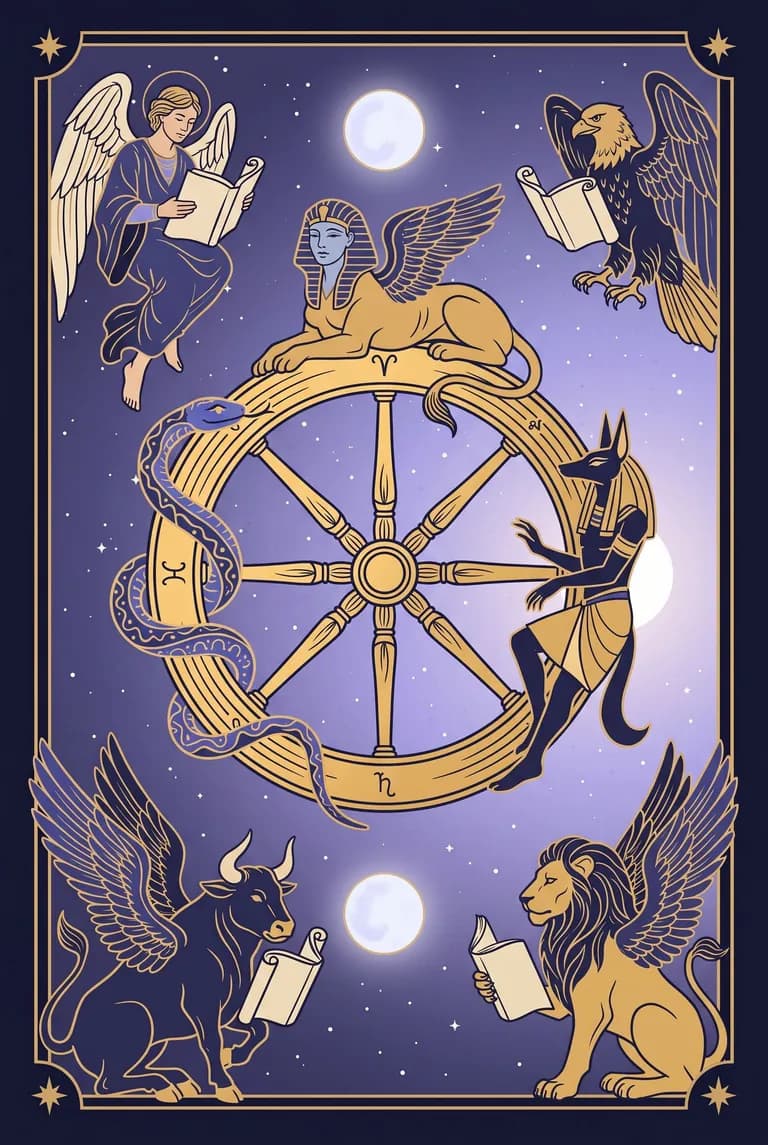
Upright
Drawn upright, the Wheel of Fortune is traditionally read as change in motion — cycles, shifts of fortune, the sense that a situation is turning rather than fixed. Rider-Waite-Smith rings it with creatures steadying themselves as it spins. Taken as a mirror, the card raises a theme rather than a prediction: where something in your life is clearly in flux, and how you might meet the turn with a steady center instead of gripping the rim. The wheel reads as rhythm, not a hand dealing you a fate. What rises will settle and what settles will move again. How you ride the change is the part that stays yours.
Reversed
The upright Wheel turns freely — cycles arriving and departing, fortune shifting as it does. Reversed, the motion can feel jammed: a change you are pushing back on, or a phase held onto after its season. As a reflection tool rather than a prophecy, this card traditionally points to your relationship with what turns whether or not you consent. The theme worth checking is the difference between what you can steer and what simply moves. Some of the wheel is weather; some of it is your hand on the spokes. Loosening the grip on what is passing tends to ease the ride. Where you push and where you let go stays a call you get to make.
Draw your card of the day
One card a day, drawn with a cryptographic shuffle and fixed before it is read. Free with an account.
Nearby cards
Cards are prompts for reflection. They describe themes, not events.
For self-reflection and entertainment — not a prediction of fate and not professional advice.