Tarot
Three of Swords
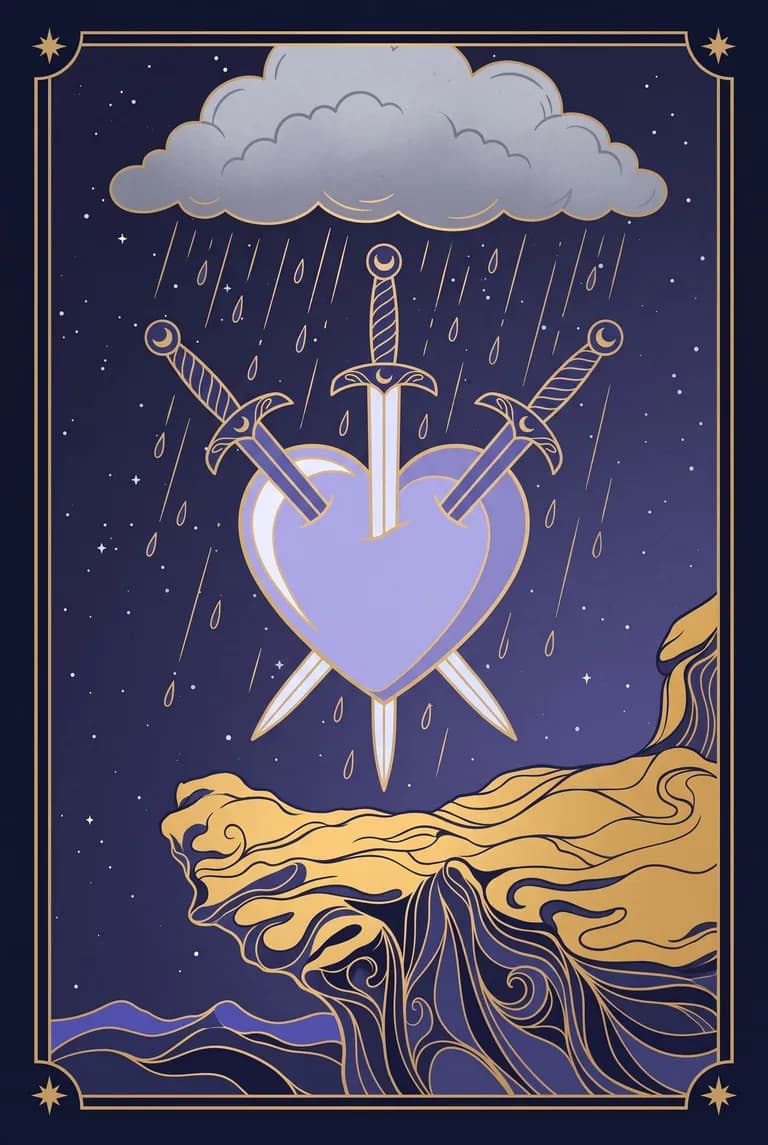
Upright
Drawn upright, the Three of Swords is read in the tradition as grief given its true shape — heartache, disappointment, the sting of something said or understood. Rider-Waite-Smith is unusually direct: a heart, three swords, grey rain, nothing softened. Taken as a mirror, the card is not a sentence passed on your life but a theme worth acknowledging — a sorrow that asks to be felt rather than argued away. The rain in the image reads as weather that passes, not a permanent sky. Naming a hurt is often where its grip begins to loosen. How you tend that tender place, and at what pace, stays gently in your hands.
Reversed
Reversed, the Three of Swords lets the rain thin and the three blades ease from the pierced heart. Upright the card is sharp sorrow, the clean ache of a painful truth; reversed, the tradition reads it as that hurt beginning to release — grief moving toward mending, or a pain still held quietly inward and waiting to be spoken. Read as a mirror for the moment, it can name where recovery has started even if the tenderness lingers. You might notice a hurt you've carried longer than it needed to stay. Letting it be felt, rather than sealed over, is the gentle theme here — healing at its own pace, not on demand.
Draw your card of the day
One card a day, drawn with a cryptographic shuffle and fixed before it is read. Free with an account.
Nearby cards
Cards are prompts for reflection. They describe themes, not events.
For self-reflection and entertainment — not a prediction of fate and not professional advice.