Tarot
Three of Cups
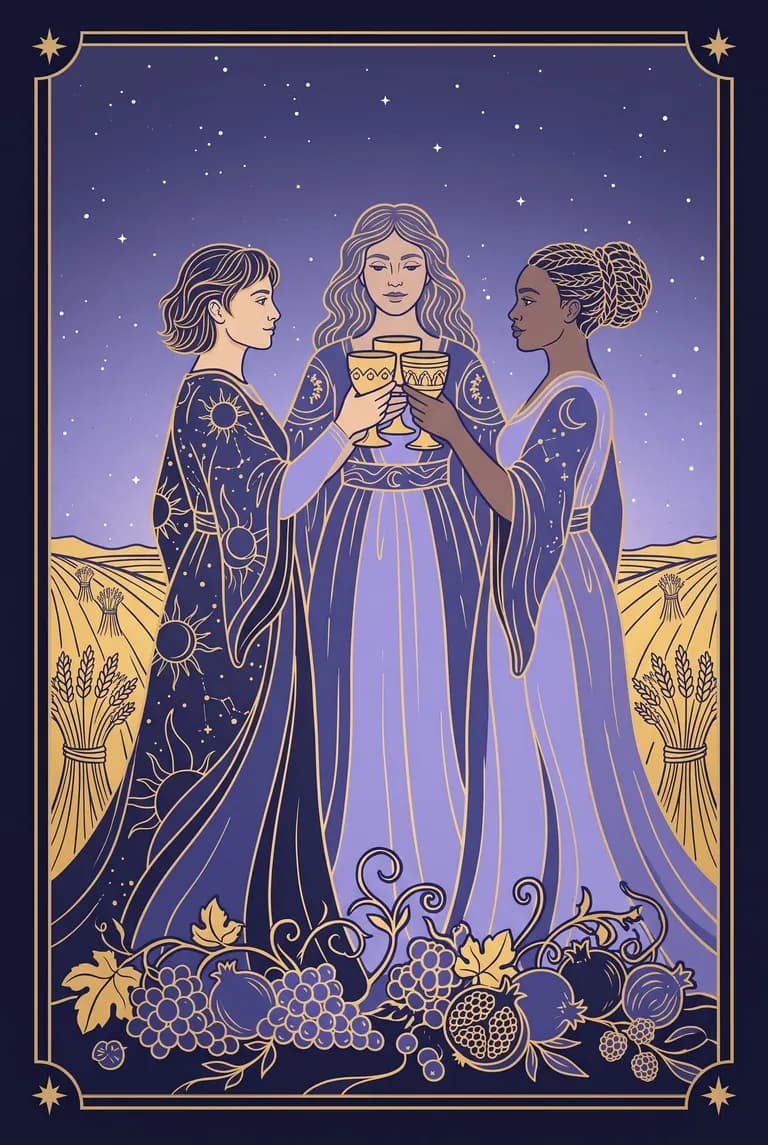
Upright
Three figures raise their cups together in the Rider-Waite-Smith scene, mid-toast, at ease. The tradition reads this as a mirror for connection in company rather than any fixed event on the way — the gladness of friendship, a milestone marked with others, the relief of not carrying things alone. Upright, the card's theme is shared joy: belonging that gets richer when it is voiced. Held as reflection, it invites a small check on where your circle actually feeds you and where you show up for others without quite letting them show up for you. The tradition lifts the toast. Who you gather around the table stays your own to choose.
Reversed
Reversed, the Three of Cups is traditionally read as the morning after the toast — the joy of company that's swung into excess, or a friendship circle that's quietly frayed. Rider-Waite-Smith shows three dancers lifting their cups in shared delight; turned over, the card asks where the balance slipped. As a mirror for the moment, it surfaces a theme rather than a ruling: maybe socializing has crowded out solitude, maybe a group's warmth has cooled, maybe celebration became the way to avoid something quieter. The reversal reads as an invitation to re-sort your company, not a mark against it. What you keep close, and what you let ease off, stays your own to weigh.
Draw your card of the day
One card a day, drawn with a cryptographic shuffle and fixed before it is read. Free with an account.
Nearby cards
Cards are prompts for reflection. They describe themes, not events.
For self-reflection and entertainment — not a prediction of fate and not professional advice.