Tarot
The High Priestess
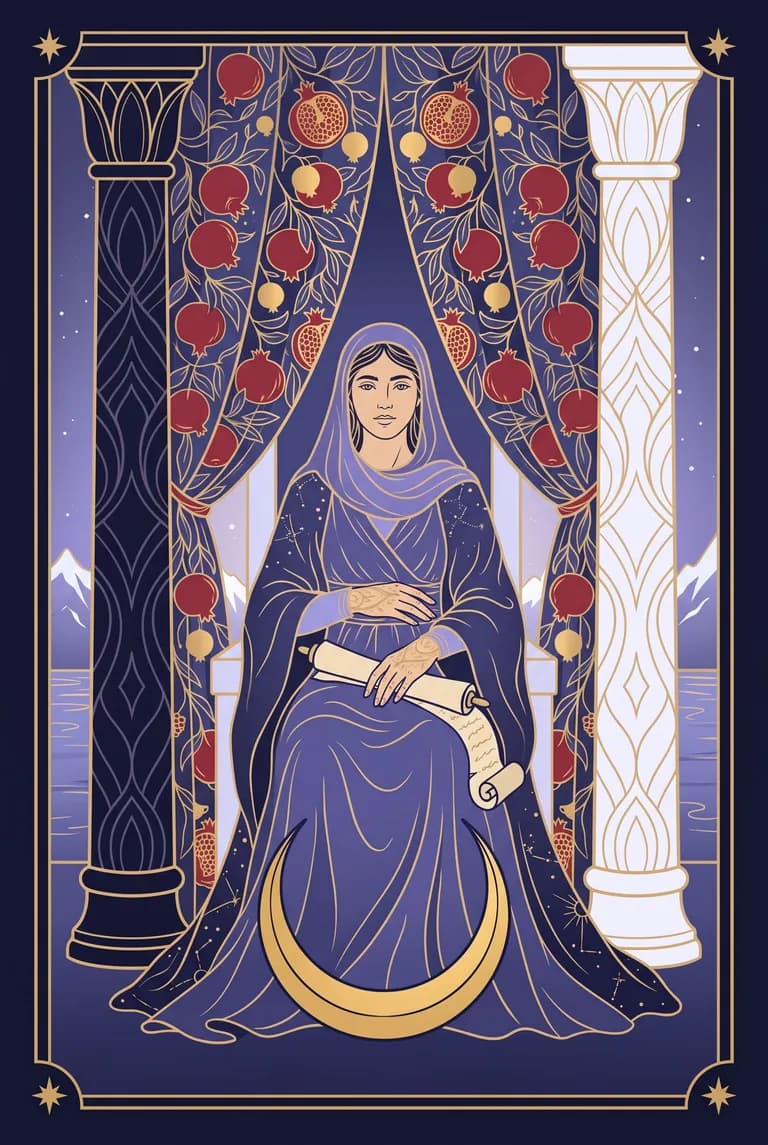
Upright
Drawn upright, the High Priestess is traditionally read as the knowledge that arrives sideways — intuition, the felt sense, what you understand before you have words for it. In Rider-Waite-Smith she sits calm at the threshold, a veil of pomegranates behind her, holding more than she says. Taken as a mirror, the card surfaces a theme worth checking in practice: where slowing down and listening inward might tell you something the noise has been drowning out. The crescent at her feet reads as receptivity rather than a demand for certainty. Some things clarify only by being left alone a while. How much you trust that quiet signal stays your own call.
Reversed
Seated between the pillars, the upright High Priestess embodies a quiet knowing that needs no words to defend it. Turned over, that channel feels muffled — intuition talked over by other people's certainty, or by your own busy mind. Held as a mirror for the moment, the reversed card traditionally points to a gap between what you sense and what you let yourself act on. The theme worth sitting with is small and practical: the inner read you keep overriding may deserve a second, calmer hearing. Nothing here asks you to distrust your logic — only to let the quieter signal back into the room. What you do with that signal is yours alone to weigh.
Draw your card of the day
One card a day, drawn with a cryptographic shuffle and fixed before it is read. Free with an account.
Nearby cards
Cards are prompts for reflection. They describe themes, not events.
For self-reflection and entertainment — not a prediction of fate and not professional advice.