Tarot
The Devil
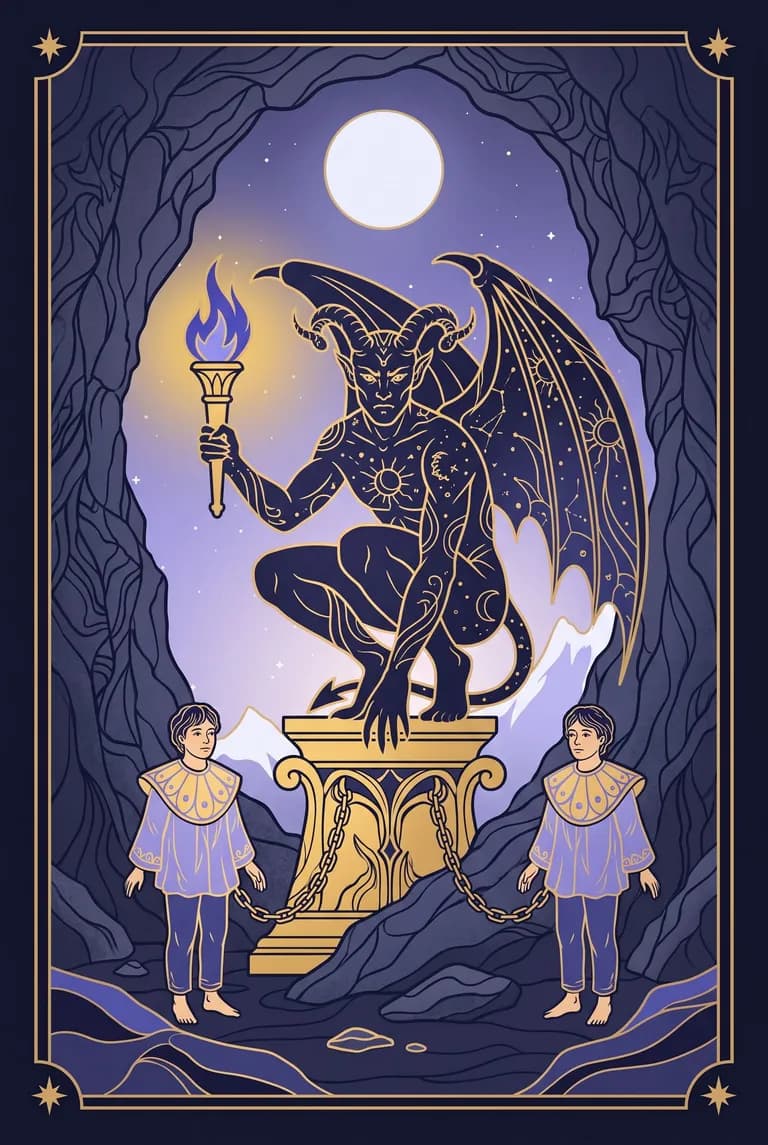
Upright
Upright, the Devil is read in the tradition as attachment and its illusions — the pulls, habits, and bargains that feel like chains yet hang loose enough to slip. Rider-Waite-Smith shows two figures bound to a plinth by collars they could lift over their heads. Held as a mirror, the card names a theme worth an honest look: where a craving, a comfort, or a limiting story has more grip on you than it truly needs. The slack chains read as choice quietly available, not a sentence handed down. Naming the hold is often the first loosening of it. What you keep and what you set down stays fully your own to decide.
Reversed
The upright Devil shows figures chained to something that binds them — yet in the image the chains sit loose, removable. Reversed, the tarot tradition reads this as the beginning of release: a pattern, a dependency, or a story you have believed about your limits, suddenly visible as a choice. Held as a mirror rather than a judgement, the card points to a bind quietly losing its grip on you. The theme worth checking is which attachment you are ready to see plainly — not to shame, only to name. Awareness is the first loosening. What you keep and what you slip free of stays, entirely and only, yours to decide.
Draw your card of the day
One card a day, drawn with a cryptographic shuffle and fixed before it is read. Free with an account.
Nearby cards
Cards are prompts for reflection. They describe themes, not events.
For self-reflection and entertainment — not a prediction of fate and not professional advice.