Tarot
Ten of Wands
Upright
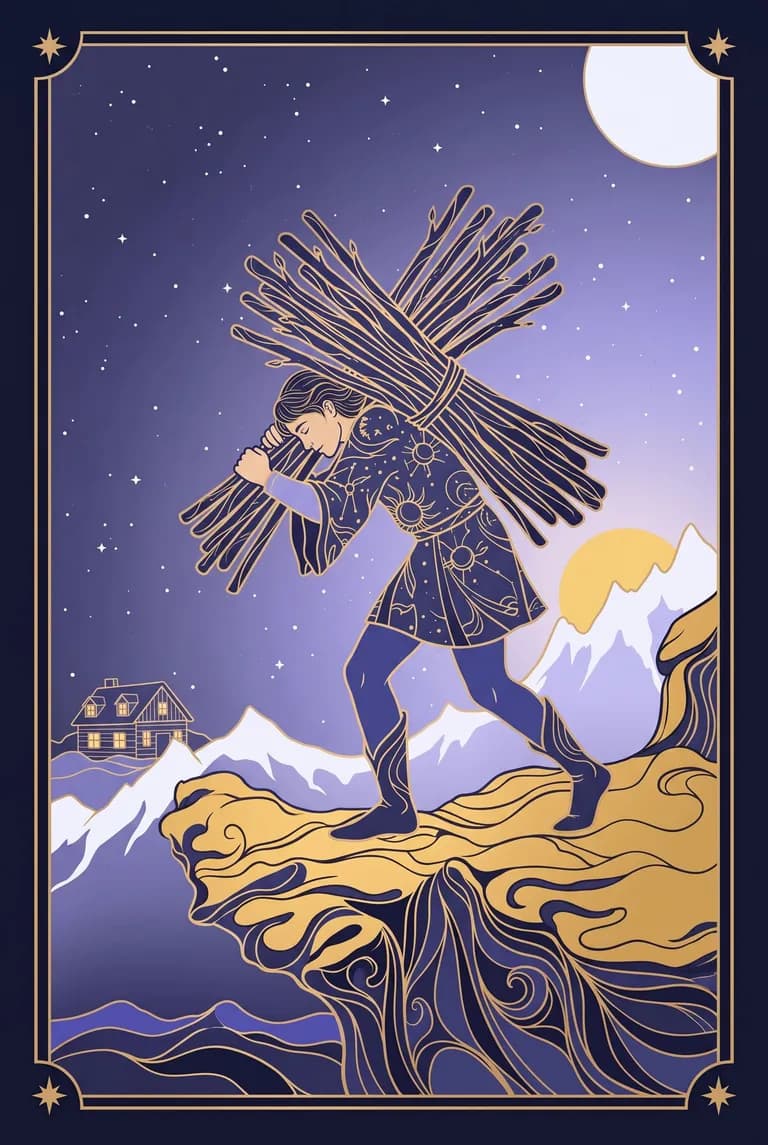
The traditional Ten of Wands shows a figure bent under a bundle of ten staves, so full an armful that the destination is almost out of sight, and it is read as burden, over-responsibility, and the cost of carrying too much alone. As a mirror for the moment, it surfaces the theme of overload: the very things you built or agreed to have piled into a weight, and the finish is close but the load is real. Held as reflection rather than a scolding, it invites you to notice what is genuinely yours to carry and what could be set down, shared, or finished. Commitment is admirable, and it does not require carrying every stave in one trip. A load put down for a moment is easier to pick up again.
Reversed
Reversed, the Ten of Wands often reads as a burden being set down at last. Upright the card is the figure bent under ten heavy staves, carrying it all alone; reversed, the tradition sees the load easing — through releasing what isn't yours, sharing the weight, or admitting the pile grew past what one pair of arms can hold. As a mirror for the moment, it can name the difference between duty and over-commitment. You might notice a responsibility you've been carrying out of habit rather than need. Putting some of it down is the theme here, and where you set it stays your call.
Draw your card of the day
One card a day, drawn with a cryptographic shuffle and fixed before it is read. Free with an account.
Nearby cards
Cards are prompts for reflection. They describe themes, not events.
For self-reflection and entertainment — not a prediction of fate and not professional advice.