Tarot
Six of Cups
Upright
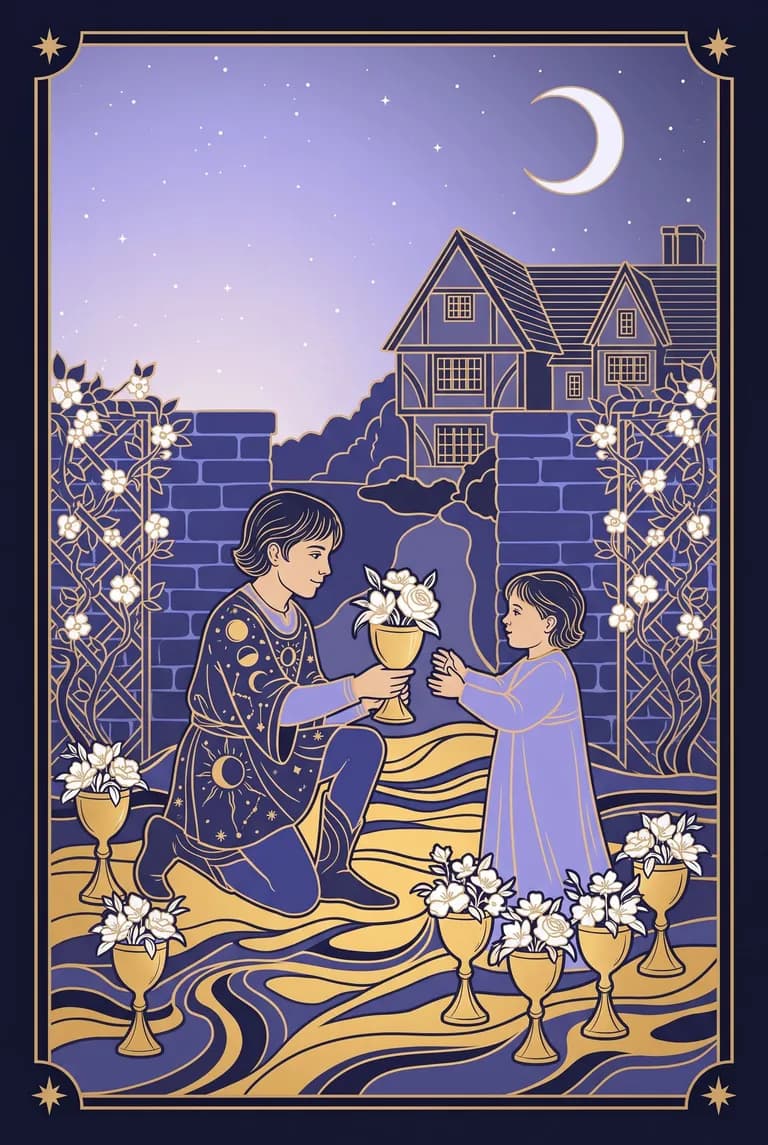
In the scene, a child hands a flower-filled cup to a smaller one within an old courtyard — a picture of simple, uncomplicated kindness. The tradition reads it as a mirror for memory rather than a claim about what is coming: warmth carried from the past, an old friendship resurfacing, the comfort of familiar ground. Upright, the Six of Cups holds nostalgia and innocence as its theme, the softness of what shaped you. Taken as reflection, it invites a light look at where remembering nourishes you and where it becomes a place to linger rather than pass through. The tradition opens the memory. Whether you visit or stay is yours to weigh.
Reversed
Upside down, the Six of Cups is read in the tradition as sweetness that's become a hiding place — fond memory tipping into living backward. Rider-Waite-Smith shows two children among flowers in a storybook courtyard, and reversed, the warmth of that scene can start to outshine the actual day. Offered as a mirror rather than a ruling on your past, it names a theme to consider: where holding an old story close might be crowding out the room a newer chapter needs. The reversal reads as a gentle nudge forward, not a rejection of where you come from. Roots and horizon can both be honored. What you carry ahead, and what you let rest, is yours to sort.
Draw your card of the day
One card a day, drawn with a cryptographic shuffle and fixed before it is read. Free with an account.
Nearby cards
Cards are prompts for reflection. They describe themes, not events.
For self-reflection and entertainment — not a prediction of fate and not professional advice.