Tarot
Page of Swords
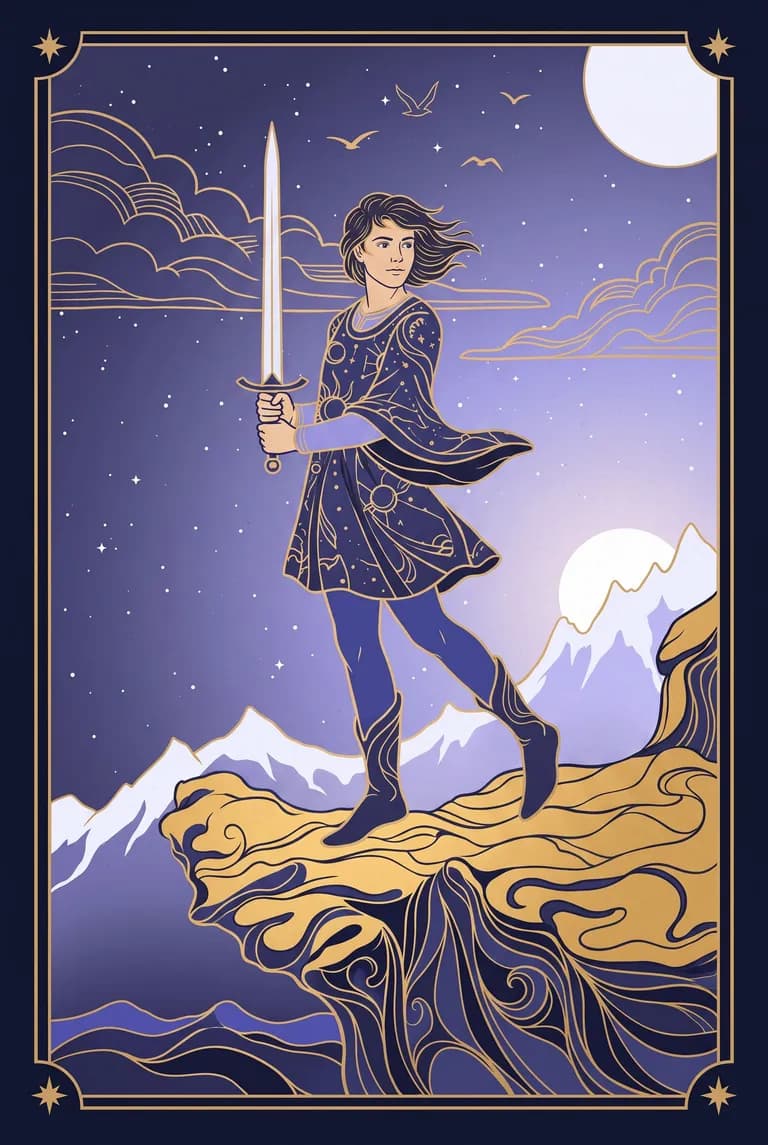
Upright
Drawn upright, the Page of Swords is traditionally read as mental appetite — curiosity, alertness, the itch to understand and to speak plainly. Rider-Waite-Smith sets a youthful figure against restless wind and clouds, sword raised, ready to test an idea. As a mirror for the moment, the card names a theme rather than fixing your character: where a fresh line of thought, a course, a conversation, or a bold question is asking for your attention. The wind reads as energy to channel rather than a warning. Truth spoken early and kindly tends to travel further than truth held back. What you turn that curiosity toward remains wholly your choice.
Reversed
The Page of Swords reversed holds a raised blade against a wind that keeps shifting. Upright this Page is bright curiosity, mental energy, an appetite for new ideas; reversed, the tradition reads it as that quick mind scattering — thoughts racing past follow-through, words rushed out before they're weighed, or alertness curdling into suspicion. Held as a mirror, it can name the gap between having sharp ideas and grounding them. You might notice a habit of speaking first and editing later, or watchfulness that reads threat where there's none. Giving a lively mind a place to land, rather than letting it spin, is the theme this reversal quietly names.
Draw your card of the day
One card a day, drawn with a cryptographic shuffle and fixed before it is read. Free with an account.
Nearby cards
Cards are prompts for reflection. They describe themes, not events.
For self-reflection and entertainment — not a prediction of fate and not professional advice.