Tarot
Page of Cups
Upright
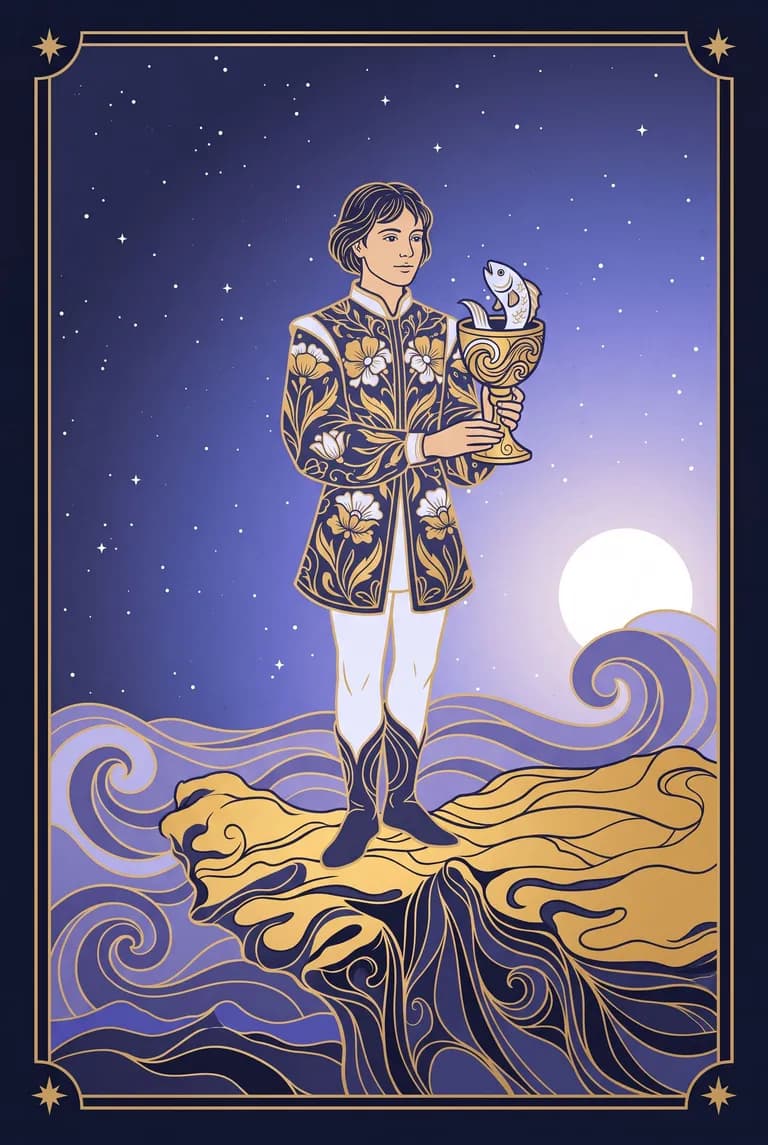
The Page stands by the sea in a bright tunic, holding a cup from which a small fish unexpectedly appears — a wink of the imagination made visible. The tradition reads this as a mirror for a fresh, gentle stirring rather than news of an event: creative curiosity, a soft feeling finding words, an openness that hasn't yet hardened into a plan. Upright, the theme is the beginner's heart — playful, receptive, unguarded. Held as reflection, it points to something worth trying in practice: the small nudge of inspiration you might dismiss as too whimsical to follow. The tradition offers the surprising cup. Whether you sip and see stays entirely with you.
Reversed
Reversed, the Page of Cups is traditionally read as a tender impulse that hasn't found its footing — a creative spark or a feeling that stays half-formed, shy of expression. Rider-Waite-Smith gives the Page a cup with an unlikely fish peeking out, imagination arriving from odd angles; turned over, that playfulness can curdle into self-doubt or a message left unsaid. As a mirror for the moment, the card names a theme rather than a label: where a delicate idea or emotion might be getting talked out of itself before it has a chance to grow. The reversal reads as an invitation to be gentler with the fragile stuff. Beginnings are allowed to look uncertain. What you nurture, and how patiently, remains yours to choose.
Draw your card of the day
One card a day, drawn with a cryptographic shuffle and fixed before it is read. Free with an account.
Nearby cards
Cards are prompts for reflection. They describe themes, not events.
For self-reflection and entertainment — not a prediction of fate and not professional advice.