Tarot
Nine of Swords
Upright
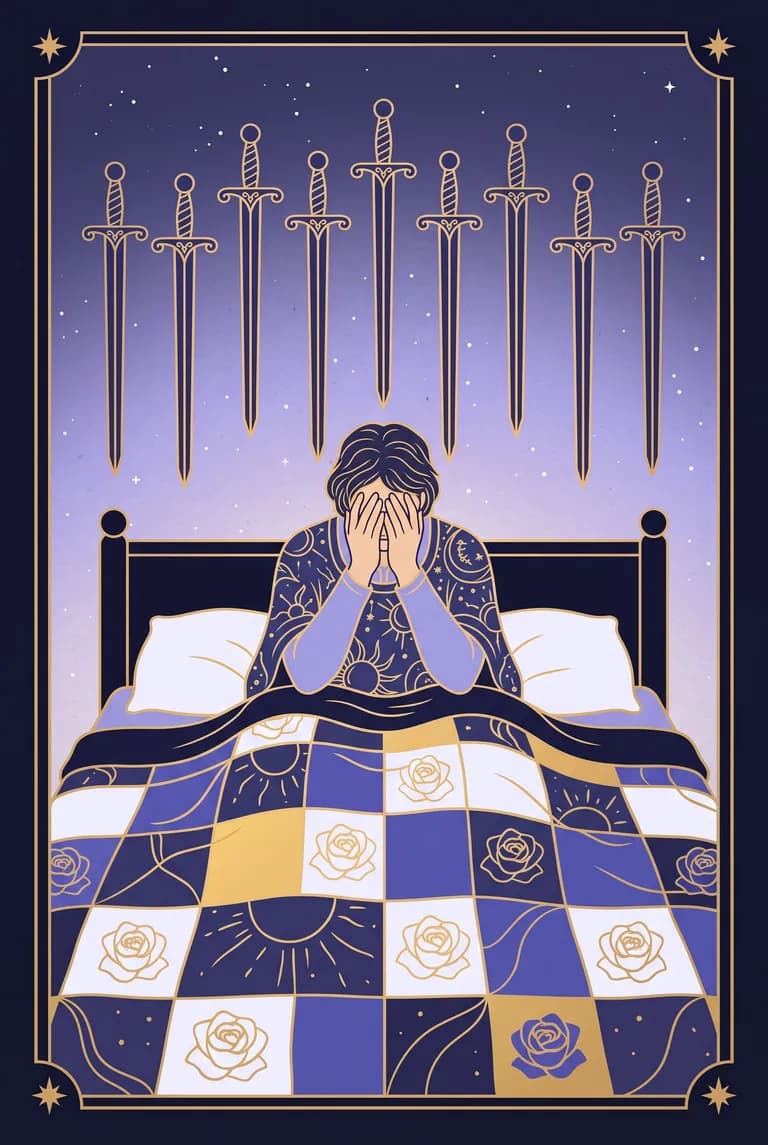
Drawn upright, the Nine of Swords is read in the tradition as the anxious hour — worry that circles at night, the mind rehearsing what the day kept at bay. Rider-Waite-Smith sits a figure upright in bed, the swords on the wall rather than in the body, which the tradition reads as fear held in thought more than in fact. Offered as a mirror, the card names a theme worth meeting with care: where a worry has grown heavier in the dark and might look smaller once named in daylight, or shared with someone you trust. Rest and gentleness read here as real support, not weakness. How you tend a restless mind stays kindly in your hands.
Reversed
Reversed, the Nine of Swords lets a little light into its sleepless room. Upright the card is the figure sitting up in the dark, head in hands, worry looping larger than the day will bear; reversed, the tradition reads it as that anxiety beginning to ease — fears spoken aloud, help asked for, or the long night thinning toward morning. Held as a mirror, it can name the moment a worry loses some of its grip once it leaves the dark of your own head. You might notice a dread that shrinks the instant you name it to someone. Reaching out, and letting the fear be shared, is the tender theme this reversal points toward.
Draw your card of the day
One card a day, drawn with a cryptographic shuffle and fixed before it is read. Free with an account.
Nearby cards
Cards are prompts for reflection. They describe themes, not events.
For self-reflection and entertainment — not a prediction of fate and not professional advice.