Tarot
Nine of Cups
Upright
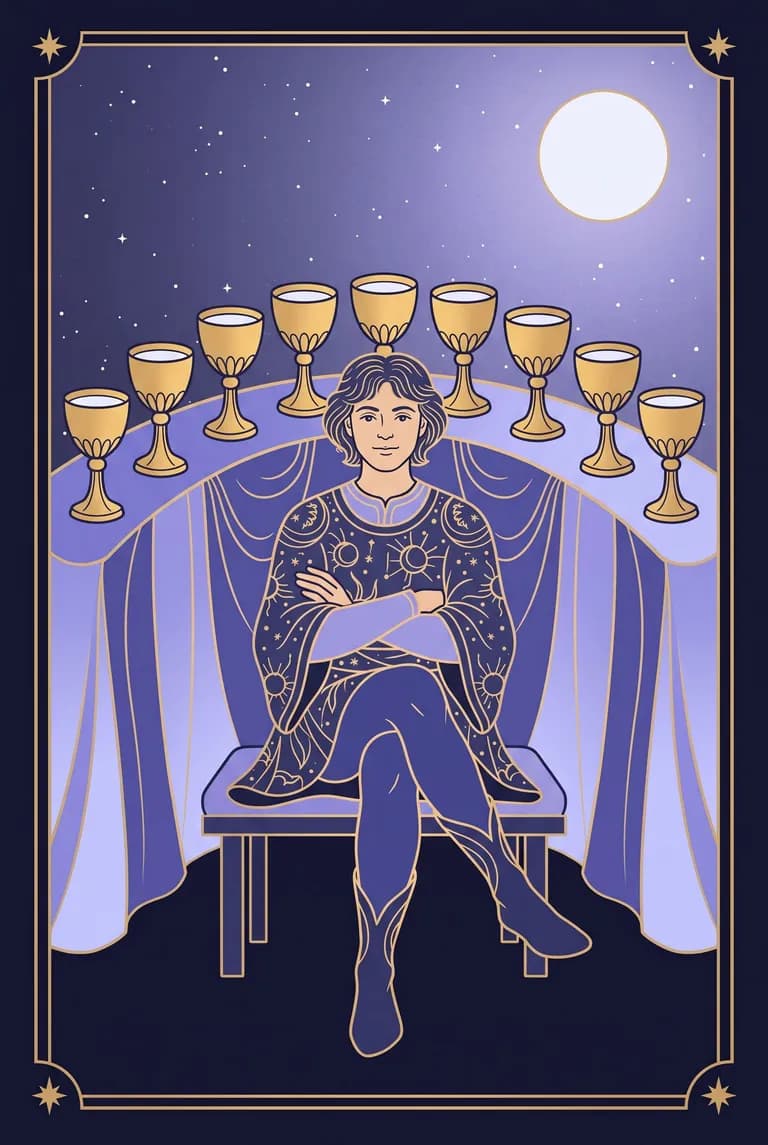
In the image a figure sits with folded arms and an easy look, nine cups arched on a shelf behind — long nicknamed the wish card. The tradition takes it as a mirror for satisfaction rather than a guarantee of granted wishes: a moment of feeling well-fed in the heart, pleased with what you've built, at home in your own comfort. Upright, the theme is contentment and gratitude, the fullness of enough. Read as reflection, it gently asks where your real satisfaction lives, and where comfort could tip into resting only in surface pleasures. The tradition sets the cups on the shelf. What genuinely fills you stays yours to name.
Reversed
Reversed, the Nine of Cups is traditionally read as the wish granted that somehow rings a little empty — pleasure that fills the table without quite filling you. Rider-Waite-Smith seats a satisfied host before a row of gleaming cups; turned over, the smugness dims and the question of what actually nourishes surfaces. As a mirror for the moment, the card names a theme rather than a rebuke: where comfort or indulgence might have stood in for something deeper you value, or where a goal reached hasn't matched the feeling you expected. The reversal reads as recalibration, not deprivation. There's nothing wrong with wanting good things. What genuinely satisfies you, and how you name it, stays your own to define.
Draw your card of the day
One card a day, drawn with a cryptographic shuffle and fixed before it is read. Free with an account.
Nearby cards
Cards are prompts for reflection. They describe themes, not events.
For self-reflection and entertainment — not a prediction of fate and not professional advice.