Tarot
Five of Swords
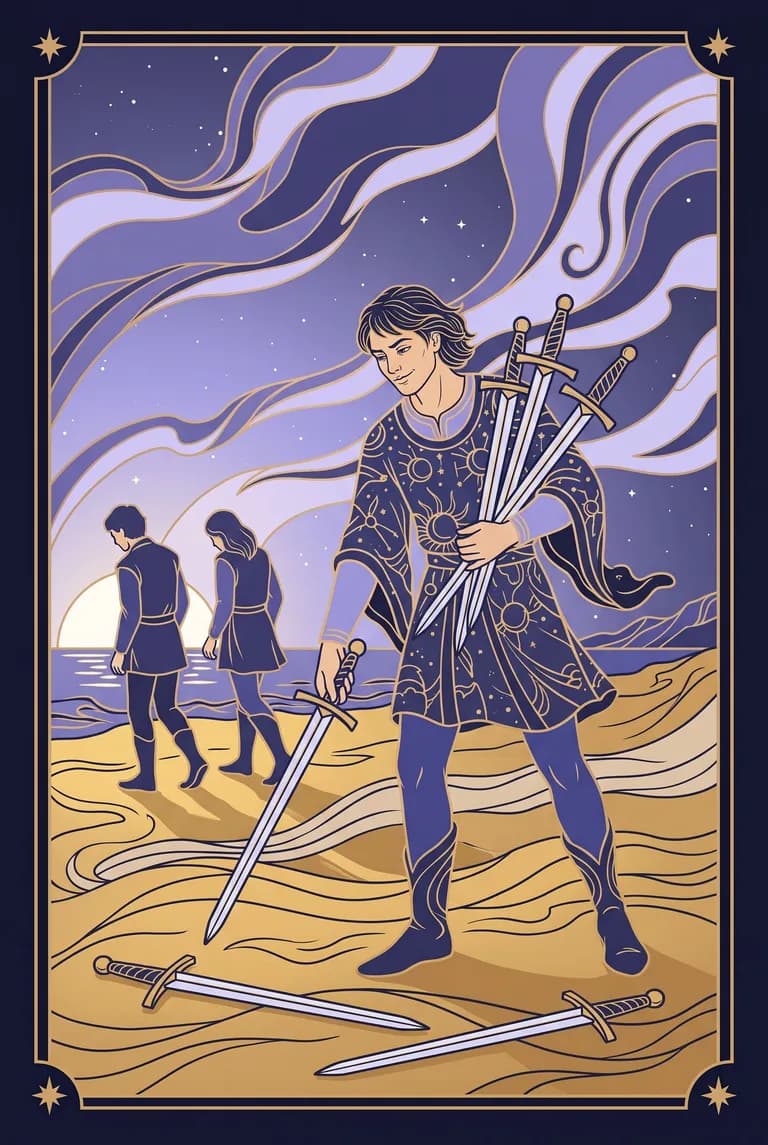
Upright
Drawn upright, the Five of Swords is read in the tradition as conflict that leaves a residue — winning that costs more than it returns, tension that lingers after the words are done. Rider-Waite-Smith shows one figure collecting the blades while others withdraw, no clear triumph in anyone's face. Held as a mirror, the card raises a theme to check in practice: where being right has started to matter more than being at ease, and what a small step back might free up. The scattered swords read as energy worth reclaiming rather than defending. Which disagreements deserve your effort, and which you can simply set down, stays your own call to make.
Reversed
When the Five of Swords falls reversed, its victor gathering the fallen blades loosens the grip. Upright the card is conflict won at a cost, the sour taste of an empty triumph; reversed, the tradition reads it as the desire to set that fight down — making amends, releasing resentment, or seeing that being right cost more than it was worth. As a mirror for now, it can name the difference between defending a point and reaching for repair. You might notice where holding a grievance keeps a small war alive inside you. Choosing to lay the blade down, when the win has gone hollow, is the theme worth testing here.
Draw your card of the day
One card a day, drawn with a cryptographic shuffle and fixed before it is read. Free with an account.
Nearby cards
Cards are prompts for reflection. They describe themes, not events.
For self-reflection and entertainment — not a prediction of fate and not professional advice.