Tarot
Ace of Cups
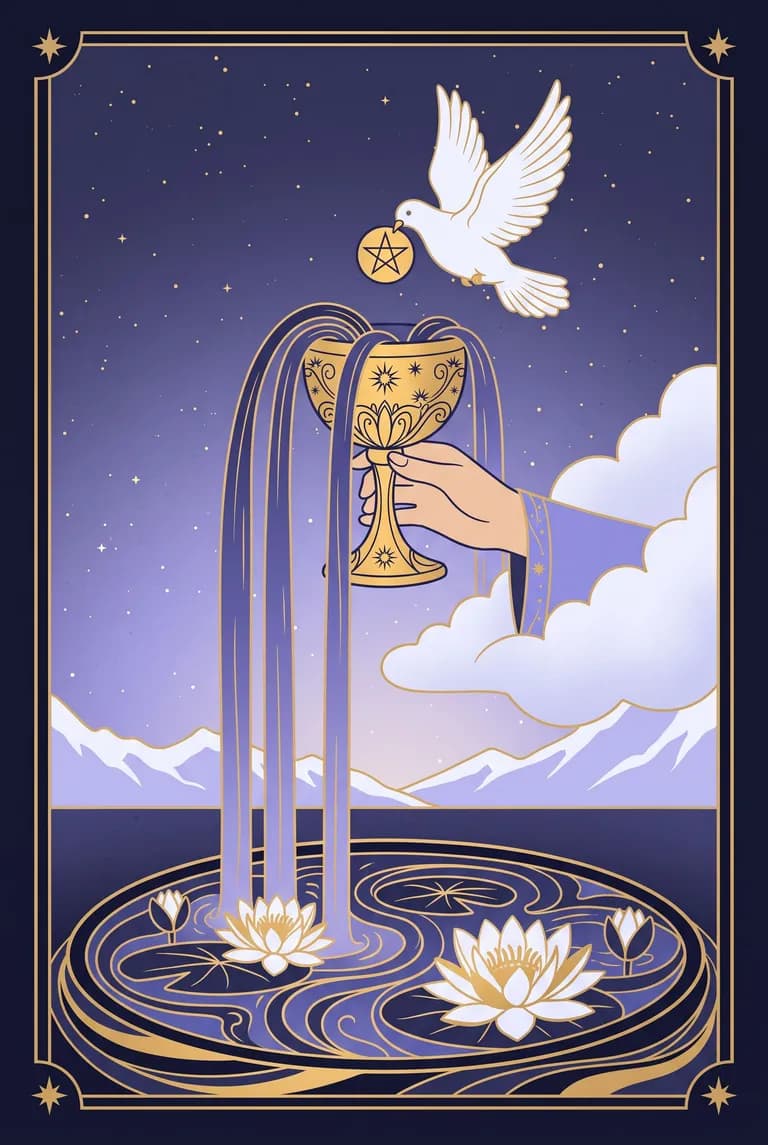
Upright
In the Rider-Waite-Smith image, a single hand offers an overflowing cup, five streams spilling past its brim. Readers hold this as a mirror for the moment rather than a forecast: a season when feeling wants to move, when warmth, compassion, or a creative impulse rises without being forced. Upright, the Ace names openness as the theme — the willingness to receive as much as to give. It points to something worth noticing in practice: where your heart already feels full, and where you tend to cap it before it can spill. The tradition simply sets the cup in your hand. What you let it pour toward stays entirely yours.
Reversed
Drawn reversed, the Ace of Cups is traditionally read as an emotional spring that's momentarily capped — the offer of feeling is there, but something keeps it from spilling freely. Rider-Waite-Smith shows the overflowing chalice turned so the water runs off to the side. Held as a mirror for the moment, the card surfaces a theme worth checking in practice: where warmth or self-compassion might be running quietly underground, waiting for a little room to surface. The reversal reads as a pause, not a drought. Sometimes the heart simply needs the pressure eased before it opens again. When and how you make that space stays entirely yours.
Draw your card of the day
One card a day, drawn with a cryptographic shuffle and fixed before it is read. Free with an account.
Nearby cards
Cards are prompts for reflection. They describe themes, not events.
For self-reflection and entertainment — not a prediction of fate and not professional advice.